For people with physical disabilities, spontaneity isn’t always spontaneous. Sometimes, the simplest pleasures require more planning than anyone realizes.
There was a time when my friends and I would make plans to go out to dinner, and the responsibility of choosing the restaurant usually fell on me. It made perfect sense. I’m a wheelchair user. My friends aren’t. They could eat just about anywhere, while I needed a restaurant that could accommodate me. They were happy with whatever I chose.
Sounds wonderful, doesn’t it?
Except choosing a restaurant wasn’t simply a matter of deciding whether I was in the mood for Italian, Mexican, or a juicy steak. I had homework to do. Was the restaurant wheelchair accessible? Did it have accessible parking? Could I get through the entrance without performing an obstacle course? Were the tables arranged so that I could actually sit comfortably without blocking the path of every waiter carrying a tray of food?
And let’s not forget the bathroom. A restaurant can have the most delicious food in town, but if I can’t use its bathroom, suddenly that five-star dining experience loses some of its appeal.
By the time I finished researching our options, I sometimes wondered whether I wanted to go out at all. Meanwhile, my friends had one responsibility. Show up hungry.
I don’t blame them. They weren’t trying to make my life difficult. Quite the opposite. By allowing me to choose, they thought they were making things easier, and in some ways, they were. But there’s a difference between giving someone the freedom to make a decision and leaving that person with all the responsibility that comes with it.
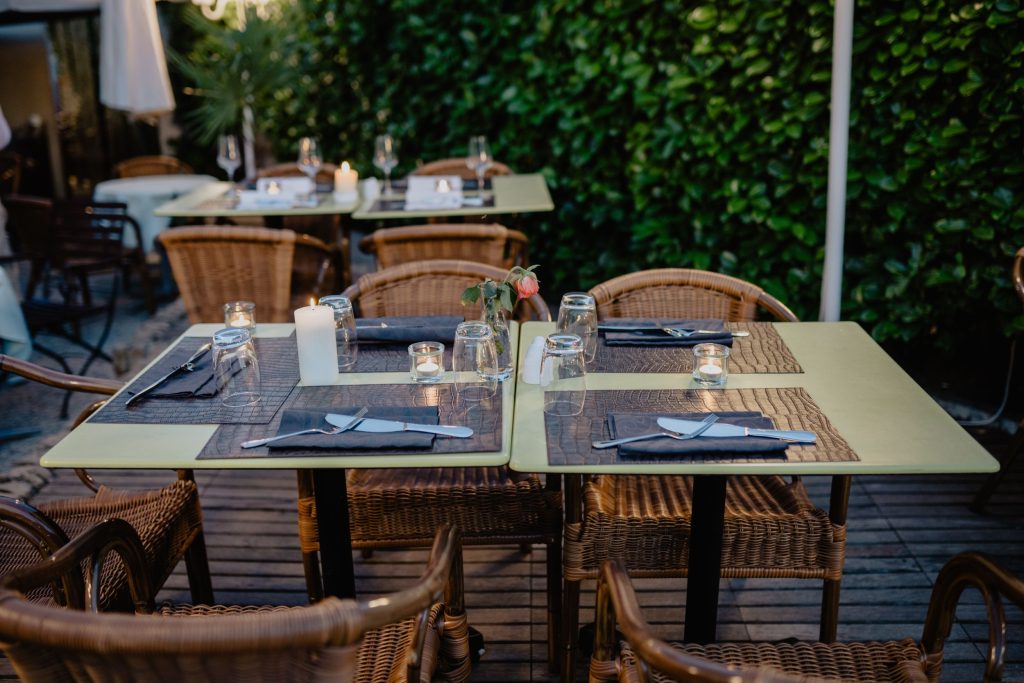
When a Good Deal Isn’t Worth the Work
Take Miami Spice, for example. There was a time when the annual restaurant event was something I looked forward to. It was an opportunity to try different restaurants, enjoy a lovely meal, and perhaps discover a new favorite.
These days, Miami Spice doesn’t even make it onto my calendar.
Part of the reason is that I don’t think the deals are nearly as enticing as they once were. But there’s another reason, and it has nothing to do with the food. I’m tired of doing the research.
Before I can even get excited about a menu, I have to figure out whether the restaurant is accessible. If I’m considering several restaurants, that means investigating each one, sometimes making phone calls because the information on their websites is either vague or nonexistent. After a while, I begin wondering whether I’m looking forward to the dinner or simply determined to finish the assignment I’ve given myself.
At some point, I have to ask whether the experience is worth the effort. I’m certainly not sitting at home feeling sorry for myself because I’m missing Miami Spice. I’ve simply decided that I would rather spend my time enjoying something else.
And I wonder how often that happens to other people with physical disabilities. We lose interest in an activity, not because we no longer find it appealing, but because getting there has become more trouble than it’s worth.
The Luxury of Spontaneity
One of the luxuries of living without a physical disability is not having to think about certain things. Someone recommends a new coffee shop, and you decide to visit. A friend mentions a restaurant with fabulous food, so you make reservations. There’s a spontaneous weekend getaway in the works, and you’re already thinking about what to pack.
Of course, everyone has preferences, budgets, schedules, and responsibilities. I’m not suggesting that people without disabilities float through life without a care in the world. But there are questions they don’t routinely have to ask before accepting an invitation.
For me, those questions begin with whether I can get inside and whether there’s enough room to maneuver my wheelchair. Then there’s the bathroom, the parking, and the possibility that someone has parked an oversized vehicle so close to the accessible space that I can’t get out of my own car.
I’ve been a wheelchair user my entire life, so much of this comes naturally to me. I know what to look for, what questions to ask, and when a reassuring answer doesn’t tell me nearly enough. Experience is a wonderful teacher, although I wish some of these lessons hadn’t required quite so many field trips!
The problem isn’t that I don’t know how to plan. It’s that I don’t always feel like planning, particularly when the whole purpose of going somewhere is to relax and have a good time.
Even Christmas Lights Come With Questions
And now the holidays are approaching, which brings me to another example.
I love this time of year. The decorations, the lights, the festive atmosphere, and all those wonderful activities that make the season feel magical. I enjoy looking through holiday calendars to see what’s happening around Miami, but I can’t simply choose an event because the photographs look beautiful or the description sounds delightful.
First, I need to know where it’s being held. Grass, gravel, or pavement? Are the pathways wide enough for my wheelchair? What about accessible parking? If the event includes attractions or activities, will I be able to participate, or will I spend most of my time watching everyone else?
Sometimes the event might be perfectly accessible, but the organizers haven’t bothered to include that information on their website. So now I have to contact someone and hope the person answering my questions actually knows what I’m asking.
Why should that information be so difficult to find? If an organizer can tell me where to buy tickets, what food vendors will be there, and whether Santa Claus is available for photographs, surely there’s room for a few sentences about accessibility.
I want to look at a holiday calendar and get excited about what I’m going to do, not immediately start investigating what I might be able to do. There’s something particularly frustrating about having to work so hard to participate in activities that are supposed to offer a little escape from the responsibilities of everyday life.
Sometimes I just want to enjoy the Christmas lights.
When Fun Becomes Another Assignment
As a middle school teacher, I spend a good portion of my day making decisions. Then there’s Audacity Magazine, my writing, household responsibilities, and everything else that comes with being an adult. I don’t need to explain the demands of everyday life to anyone. We all have them.
But when I want to enjoy myself, I don’t particularly want another assignment. I don’t want to investigate a restaurant as though I’m preparing a report for the health department or spend an afternoon making phone calls to determine whether a hotel room advertised as accessible actually meets my needs.
And I certainly don’t want to arrive somewhere only to discover that someone’s definition of accessibility is considerably more imaginative than mine.
Sometimes I just want to put on something fabulous, meet my friends, order dinner, and enjoy the conversation. Is that really asking so much?
I think about the amount of mental energy we spend anticipating problems that haven’t happened yet. It isn’t necessarily pessimism. Experience has taught us that an inaccessible entrance can mean changing plans, an unusable bathroom can mean leaving early, and a hotel that doesn’t deliver what it promised can turn a vacation into an expensive disappointment.
We learn to think ahead because doing otherwise can leave us in situations we’d rather avoid. The irony is that all this preparation makes it possible for us to participate, yet sometimes the effort involved takes away some of the pleasure.
Accessibility conversations tend to focus on whether a building, service, or activity can accommodate people with disabilities. Those are important discussions, but I think we’re overlooking something else: the time and attention we spend figuring out whether we can participate in the first place.
A Different Kind of Consideration
I’ve also been thinking about what it means when someone offers to make things easier for us.
Remember those dinners with my friends? They were considerate people who wanted me to be comfortable. Nobody complained about my restaurant choices, and I appreciated that. But imagine how different the conversation might have been if someone had said, “I found three restaurants that look accessible. Why don’t you tell me which one works best for you?”
Now we’re talking!
I would still have the final say because nobody knows my wheelchair, my comfort, or my requirements better than I do. The difference is that someone else would have invested a little time before bringing me into the decision.
I think that’s a lovely gesture, and it doesn’t require a grand declaration of friendship. It simply recognizes that knowing how to handle something doesn’t mean you should always be the one responsible for handling it.
Naturally, I wouldn’t want anyone making assumptions about my needs or deciding what’s best for me without asking. That would defeat the purpose. But sharing the work while respecting my judgment? I could certainly get used to that.
I Want the Luxury, Too
I’ve never expected a world where I wouldn’t have to plan anything. Preparation is part of life, and I’m quite capable of making my own arrangements. I enjoy my independence and have no intention of surrendering it.
Still, I sometimes wonder how much of our lives we spend preparing to live them.
Think about a vacation. Before enjoying the destination, there may be transportation arrangements, questions about the hotel, research into attractions, and contingency plans in case something doesn’t work out. By the time we arrive, we’ve already devoted considerable attention to making sure the trip can happen.
Of course, plenty of people enjoy planning their vacations. I enjoy certain parts of it myself. What I don’t enjoy is having to investigate basic accessibility every time I want to experience something new.
I suppose that’s what I mean by the luxury of not having to think about it. It’s the freedom to accept an invitation without wondering whether the entrance has a step, to choose a restaurant because the menu looks delicious, or to see a holiday event advertised and think about how much fun it might be instead of how much research it will require.
I love making my own decisions. But every once in a while, I’d like someone to say, “I found a great place. I checked everything. All you have to do is show up.”
Now that’s what I call luxury. And if the food is fabulous, even better.
Here’s another article about access and dining. Click here.
Stay Audacious
Have you ever decided that an outing wasn’t worth all the research? Or had someone take the initiative to investigate accessibility before inviting you somewhere? I’d love to hear about it, especially those thoughtful gestures that made an ordinary experience a little more enjoyable.
If these are the kinds of conversations you enjoy, subscribe to the Audacious Newsletter. We talk about the everyday experiences of living with physical disabilities, including the little things that deserve more attention.
You can also buy me a coffee to support my independent writing and the continued work of Audacity Magazine. Your support helps keep these conversations going.